What Heavy-Duty Tow Dispatch Needs to Know
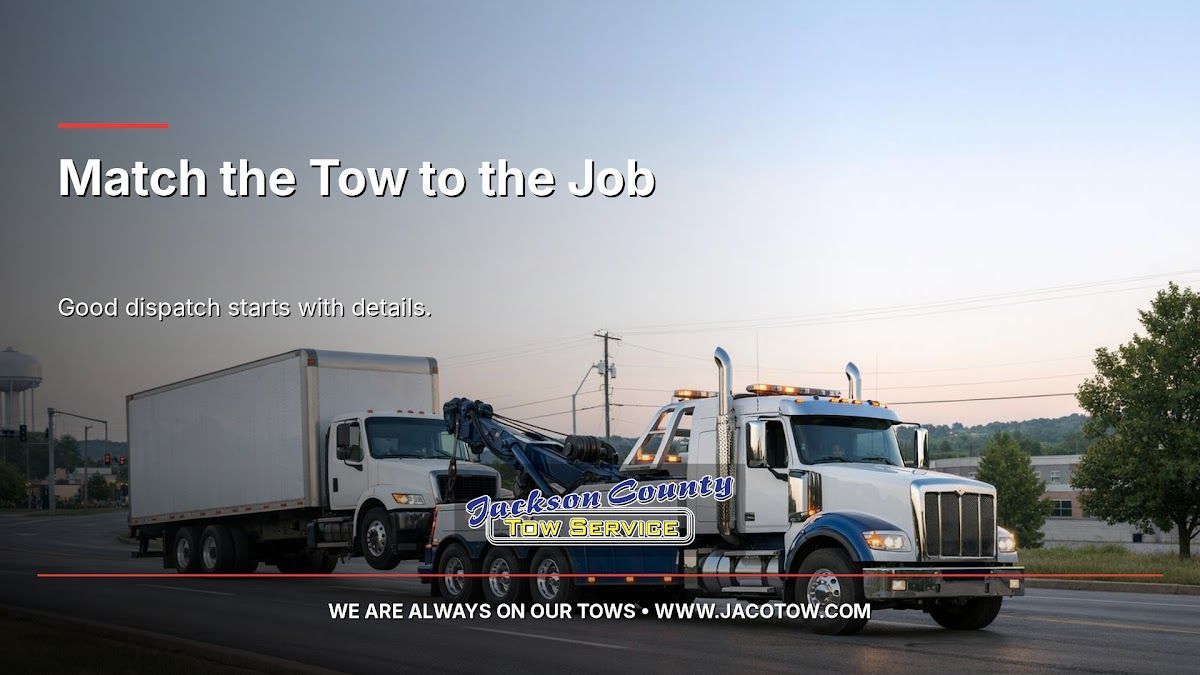
Heavy-duty towing is not a one-size-fits-all dispatch. Before equipment is assigned, the dispatcher needs a clear picture of the vehicle, the load, the location, and the conditions around it. Those details help define the job before a truck is sent.
Vehicle class is the first distinction. A box truck, bus, tractor, trailer, RV, or piece of equipment can require different towing and recovery considerations. Load status also matters because a loaded commercial vehicle presents a different assignment than the same vehicle empty.
Location and access can change the plan just as much as the vehicle. A unit parked in an open fleet yard is different from one positioned on a narrow shoulder, in a loading area, or behind a restricted entrance. Dispatch also needs to know the vehicle’s current condition, whether wheels are accessible, whether the unit can roll, and where it needs to go.
When contacting Jackson County Tow Service, provide the exact location, vehicle type, load status, observed condition, access limitations, destination, and any roadway or site details that may affect the response. Complete information does not promise a specific truck or arrival time, but it gives dispatch a stronger basis for planning the job.
Jackson County Tow Service has served the Kansas City metro since 2009. For commercial drivers, fleet contacts, and local businesses, a clear dispatch conversation is the first step toward matching the response to the actual situation.
Jackson County Tow Service Blog